What Colors Are Infants Attracted To
Bye bye beige, hello color! Why babies and children are so attracted to color You may have noticed it already: you come into a toy store and your child runs to the most colorful toys. From an early age, your child is attracted to color, and preferably the brightest colors. The reason for this? Well, you'll discover it here.
A study conducted on infants' reactions to different colored toys found that babies preferred toys with bright primary colors over those with muted tones. The findings suggest that colorful toys not only attract babies but also encourage them to reach out and interact with their environment. Color Preferences by Age As babies grow older, their color preferences can shift based on exposure and.
How do children feel about colors? How might the colors of toys increase play and discovery? There is a science of color that shows us that infants and children relate to the world through color.
Colors play an important role in capturing and holding children's attention. Young children are drawn to bright, bold colors that stand out. Understanding what hues attract kids' focus can help parents, teachers, and marketers engage effectively with children.
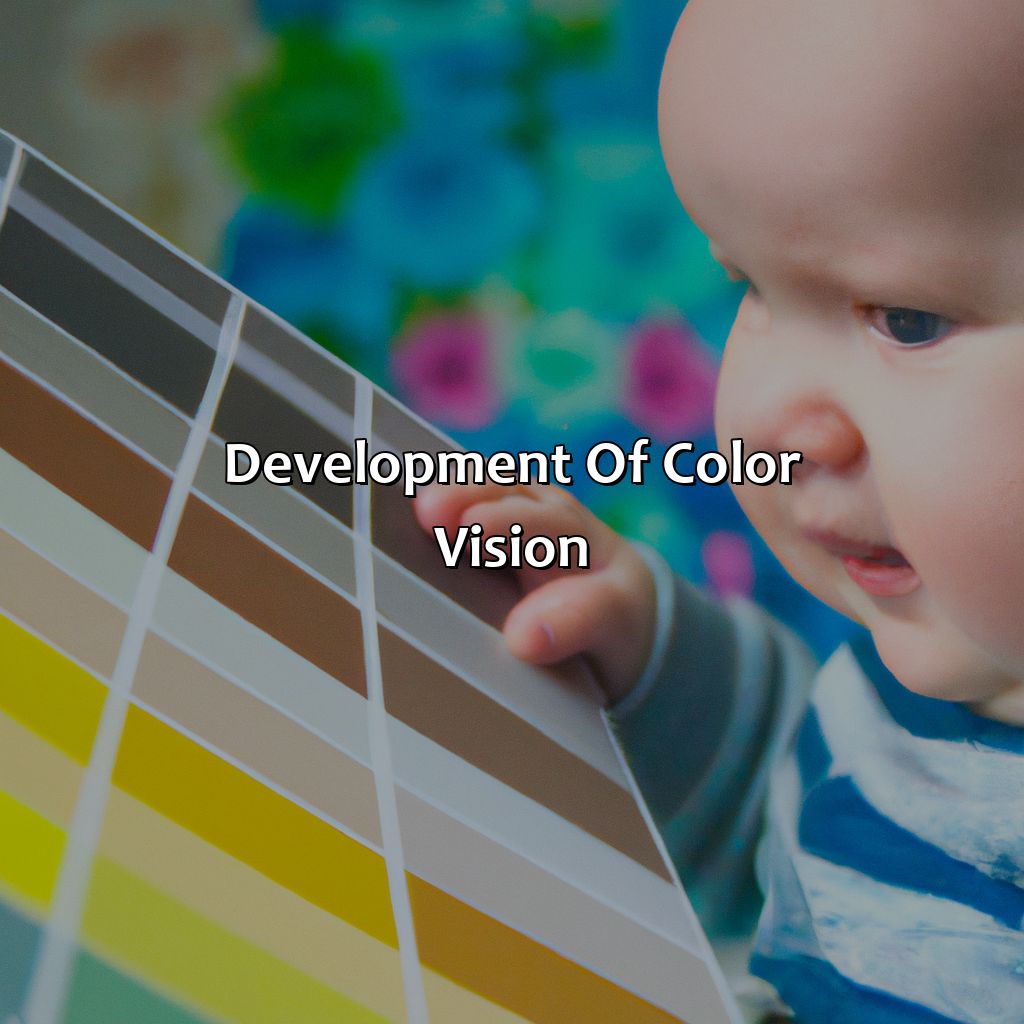
What Colors Can Babies See At One Month? Baby Color Vision Development ...

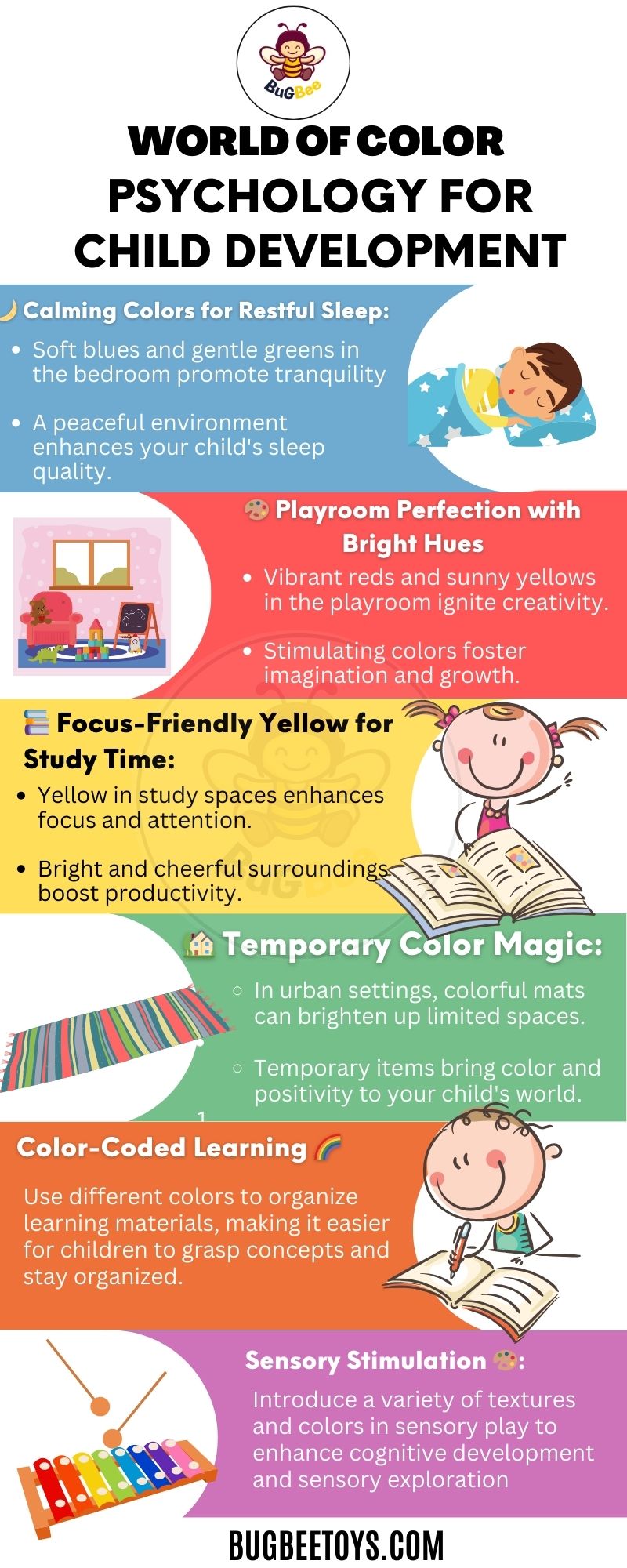
Explore how colors impact child development, emotions, and learning. Discover practical applications and research insights in child psychology and color.
How do children feel about colors? How might the colors of toys increase play and discovery? There is a science of color that shows us that infants and children relate to the world through color.
A study conducted on infants' reactions to different colored toys found that babies preferred toys with bright primary colors over those with muted tones. The findings suggest that colorful toys not only attract babies but also encourage them to reach out and interact with their environment. Color Preferences by Age As babies grow older, their color preferences can shift based on exposure and.
Colors That Appeal to Children Children tend to be attracted to the bright block colors of the color wheel rather than pastels or muted blends. Primary colors red, yellow and blue, and secondary colors green, orange and purple, are more appealing than light shades of pink and beige or neutral shades of gray and brown. For this reason, the food and beverage industries, as well as the toy.
A study conducted on infants' reactions to different colored toys found that babies preferred toys with bright primary colors over those with muted tones. The findings suggest that colorful toys not only attract babies but also encourage them to reach out and interact with their environment. Color Preferences by Age As babies grow older, their color preferences can shift based on exposure and.
Wondering how different colors can affect baby's early development? Find out how babies learn to cognitively process color and what colors are best to support physical, cognitive and emotional development.
While bright colors are preferred by all children, being easier for the eyes to see, they affect mood and behavior when it's too much. Bright colors attract the eyes and lead to a slow learning process and moodiness. Studies have directly linked color with brain development. Babies and children react both emotionally and physically to colors.
But what colors are babies most attracted to? And how do these colors impact their development and learning? As parents, caregivers, and educators, it's essential to understand the importance of colors in a baby's life.
A Better Way To Help Toddlers Learn Colors | Lovevery

Explore how colors impact child development, emotions, and learning. Discover practical applications and research insights in child psychology and color.
But what colors are babies most attracted to? And how do these colors impact their development and learning? As parents, caregivers, and educators, it's essential to understand the importance of colors in a baby's life.
While bright colors are preferred by all children, being easier for the eyes to see, they affect mood and behavior when it's too much. Bright colors attract the eyes and lead to a slow learning process and moodiness. Studies have directly linked color with brain development. Babies and children react both emotionally and physically to colors.
Wondering how different colors can affect baby's early development? Find out how babies learn to cognitively process color and what colors are best to support physical, cognitive and emotional development.

A study conducted on infants' reactions to different colored toys found that babies preferred toys with bright primary colors over those with muted tones. The findings suggest that colorful toys not only attract babies but also encourage them to reach out and interact with their environment. Color Preferences by Age As babies grow older, their color preferences can shift based on exposure and.
Explore how colors impact child development, emotions, and learning. Discover practical applications and research insights in child psychology and color.
While bright colors are preferred by all children, being easier for the eyes to see, they affect mood and behavior when it's too much. Bright colors attract the eyes and lead to a slow learning process and moodiness. Studies have directly linked color with brain development. Babies and children react both emotionally and physically to colors.
Bye bye beige, hello color! Why babies and children are so attracted to color You may have noticed it already: you come into a toy store and your child runs to the most colorful toys. From an early age, your child is attracted to color, and preferably the brightest colors. The reason for this? Well, you'll discover it here.
What Age Do Babies See Color - Colorscombo.com
While bright colors are preferred by all children, being easier for the eyes to see, they affect mood and behavior when it's too much. Bright colors attract the eyes and lead to a slow learning process and moodiness. Studies have directly linked color with brain development. Babies and children react both emotionally and physically to colors.
How do children feel about colors? How might the colors of toys increase play and discovery? There is a science of color that shows us that infants and children relate to the world through color.
Bright colors, such as red, yellow, and blue, are particularly effective at capturing an infant's attention. These colors are often associated with fun and energy, making them ideal for toys, books, and other learning materials. When infants interact with colorful objects, they engage in sensory exploration, which is vital for their overall development.
Bye bye beige, hello color! Why babies and children are so attracted to color You may have noticed it already: you come into a toy store and your child runs to the most colorful toys. From an early age, your child is attracted to color, and preferably the brightest colors. The reason for this? Well, you'll discover it here.
Babies' Gazes Suggest We Are Born Understanding Color | Science | AAAS

Colors That Appeal to Children Children tend to be attracted to the bright block colors of the color wheel rather than pastels or muted blends. Primary colors red, yellow and blue, and secondary colors green, orange and purple, are more appealing than light shades of pink and beige or neutral shades of gray and brown. For this reason, the food and beverage industries, as well as the toy.
Bye bye beige, hello color! Why babies and children are so attracted to color You may have noticed it already: you come into a toy store and your child runs to the most colorful toys. From an early age, your child is attracted to color, and preferably the brightest colors. The reason for this? Well, you'll discover it here.
Wondering how different colors can affect baby's early development? Find out how babies learn to cognitively process color and what colors are best to support physical, cognitive and emotional development.
Explore how colors impact child development, emotions, and learning. Discover practical applications and research insights in child psychology and color.
Best Nursery Colors For Baby Development | Nursery Colors, Baby Nursery ...

Colors play an important role in capturing and holding children's attention. Young children are drawn to bright, bold colors that stand out. Understanding what hues attract kids' focus can help parents, teachers, and marketers engage effectively with children.
While bright colors are preferred by all children, being easier for the eyes to see, they affect mood and behavior when it's too much. Bright colors attract the eyes and lead to a slow learning process and moodiness. Studies have directly linked color with brain development. Babies and children react both emotionally and physically to colors.
How do children feel about colors? How might the colors of toys increase play and discovery? There is a science of color that shows us that infants and children relate to the world through color.
Wondering how different colors can affect baby's early development? Find out how babies learn to cognitively process color and what colors are best to support physical, cognitive and emotional development.
Why Are Baby's Attracted To Bright Colors?

Colors play an important role in capturing and holding children's attention. Young children are drawn to bright, bold colors that stand out. Understanding what hues attract kids' focus can help parents, teachers, and marketers engage effectively with children.
While bright colors are preferred by all children, being easier for the eyes to see, they affect mood and behavior when it's too much. Bright colors attract the eyes and lead to a slow learning process and moodiness. Studies have directly linked color with brain development. Babies and children react both emotionally and physically to colors.
But what colors are babies most attracted to? And how do these colors impact their development and learning? As parents, caregivers, and educators, it's essential to understand the importance of colors in a baby's life.
Bright colors, such as red, yellow, and blue, are particularly effective at capturing an infant's attention. These colors are often associated with fun and energy, making them ideal for toys, books, and other learning materials. When infants interact with colorful objects, they engage in sensory exploration, which is vital for their overall development.
Expert Advice: How Colors Affect Your Baby's Development

A study conducted on infants' reactions to different colored toys found that babies preferred toys with bright primary colors over those with muted tones. The findings suggest that colorful toys not only attract babies but also encourage them to reach out and interact with their environment. Color Preferences by Age As babies grow older, their color preferences can shift based on exposure and.
Wondering how different colors can affect baby's early development? Find out how babies learn to cognitively process color and what colors are best to support physical, cognitive and emotional development.
But what colors are babies most attracted to? And how do these colors impact their development and learning? As parents, caregivers, and educators, it's essential to understand the importance of colors in a baby's life.
Colors That Appeal to Children Children tend to be attracted to the bright block colors of the color wheel rather than pastels or muted blends. Primary colors red, yellow and blue, and secondary colors green, orange and purple, are more appealing than light shades of pink and beige or neutral shades of gray and brown. For this reason, the food and beverage industries, as well as the toy.
When Can Babies See Colors? 5 Vision Milestones By 12 Months

Bright colors, such as red, yellow, and blue, are particularly effective at capturing an infant's attention. These colors are often associated with fun and energy, making them ideal for toys, books, and other learning materials. When infants interact with colorful objects, they engage in sensory exploration, which is vital for their overall development.
Bye bye beige, hello color! Why babies and children are so attracted to color You may have noticed it already: you come into a toy store and your child runs to the most colorful toys. From an early age, your child is attracted to color, and preferably the brightest colors. The reason for this? Well, you'll discover it here.
A study conducted on infants' reactions to different colored toys found that babies preferred toys with bright primary colors over those with muted tones. The findings suggest that colorful toys not only attract babies but also encourage them to reach out and interact with their environment. Color Preferences by Age As babies grow older, their color preferences can shift based on exposure and.
While bright colors are preferred by all children, being easier for the eyes to see, they affect mood and behavior when it's too much. Bright colors attract the eyes and lead to a slow learning process and moodiness. Studies have directly linked color with brain development. Babies and children react both emotionally and physically to colors.
How Do Babies See Colors? - You Are Mom | D.o Baby, Color, Baby

While bright colors are preferred by all children, being easier for the eyes to see, they affect mood and behavior when it's too much. Bright colors attract the eyes and lead to a slow learning process and moodiness. Studies have directly linked color with brain development. Babies and children react both emotionally and physically to colors.
Bright colors, such as red, yellow, and blue, are particularly effective at capturing an infant's attention. These colors are often associated with fun and energy, making them ideal for toys, books, and other learning materials. When infants interact with colorful objects, they engage in sensory exploration, which is vital for their overall development.
A study conducted on infants' reactions to different colored toys found that babies preferred toys with bright primary colors over those with muted tones. The findings suggest that colorful toys not only attract babies but also encourage them to reach out and interact with their environment. Color Preferences by Age As babies grow older, their color preferences can shift based on exposure and.
Colors play an important role in capturing and holding children's attention. Young children are drawn to bright, bold colors that stand out. Understanding what hues attract kids' focus can help parents, teachers, and marketers engage effectively with children.
COLORS FOR BABY’S ROOM: HOW COLOR AFFECTS BABY - Nursery Design Studio

Colors That Appeal to Children Children tend to be attracted to the bright block colors of the color wheel rather than pastels or muted blends. Primary colors red, yellow and blue, and secondary colors green, orange and purple, are more appealing than light shades of pink and beige or neutral shades of gray and brown. For this reason, the food and beverage industries, as well as the toy.
Wondering how different colors can affect baby's early development? Find out how babies learn to cognitively process color and what colors are best to support physical, cognitive and emotional development.
Bye bye beige, hello color! Why babies and children are so attracted to color You may have noticed it already: you come into a toy store and your child runs to the most colorful toys. From an early age, your child is attracted to color, and preferably the brightest colors. The reason for this? Well, you'll discover it here.
But what colors are babies most attracted to? And how do these colors impact their development and learning? As parents, caregivers, and educators, it's essential to understand the importance of colors in a baby's life.
Color Psychology | Affects Of Colors On A Child's Psychology

Wondering how different colors can affect baby's early development? Find out how babies learn to cognitively process color and what colors are best to support physical, cognitive and emotional development.
Bright colors, such as red, yellow, and blue, are particularly effective at capturing an infant's attention. These colors are often associated with fun and energy, making them ideal for toys, books, and other learning materials. When infants interact with colorful objects, they engage in sensory exploration, which is vital for their overall development.
Bye bye beige, hello color! Why babies and children are so attracted to color You may have noticed it already: you come into a toy store and your child runs to the most colorful toys. From an early age, your child is attracted to color, and preferably the brightest colors. The reason for this? Well, you'll discover it here.
How do children feel about colors? How might the colors of toys increase play and discovery? There is a science of color that shows us that infants and children relate to the world through color.
What Colors Attract Children's Attention?

Colors That Appeal to Children Children tend to be attracted to the bright block colors of the color wheel rather than pastels or muted blends. Primary colors red, yellow and blue, and secondary colors green, orange and purple, are more appealing than light shades of pink and beige or neutral shades of gray and brown. For this reason, the food and beverage industries, as well as the toy.
Colors play an important role in capturing and holding children's attention. Young children are drawn to bright, bold colors that stand out. Understanding what hues attract kids' focus can help parents, teachers, and marketers engage effectively with children.
But what colors are babies most attracted to? And how do these colors impact their development and learning? As parents, caregivers, and educators, it's essential to understand the importance of colors in a baby's life.
Bye bye beige, hello color! Why babies and children are so attracted to color You may have noticed it already: you come into a toy store and your child runs to the most colorful toys. From an early age, your child is attracted to color, and preferably the brightest colors. The reason for this? Well, you'll discover it here.
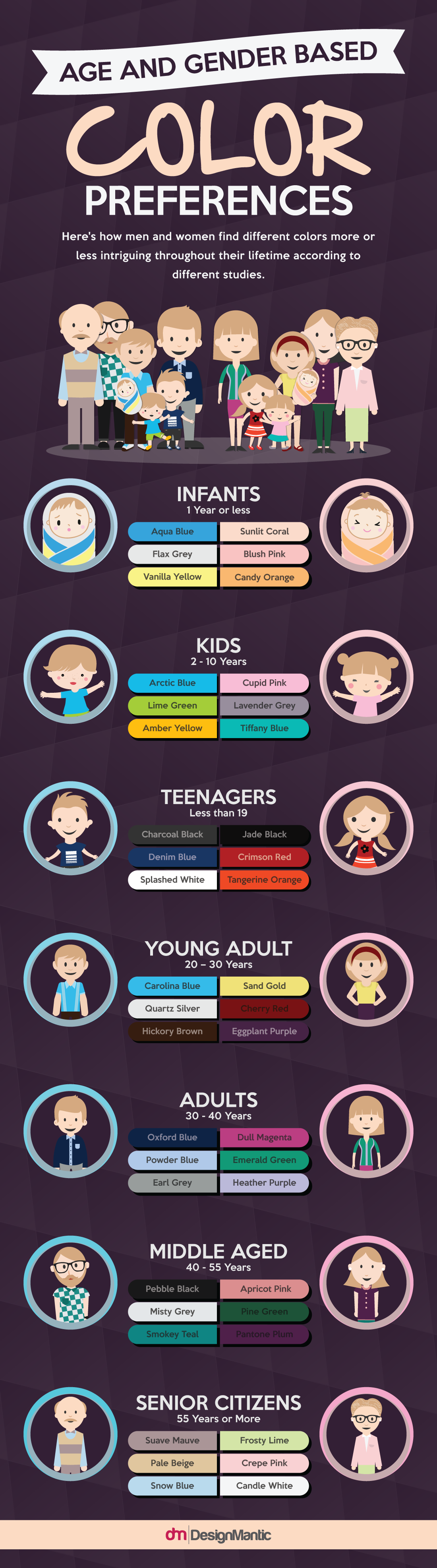
Age And Gender Color Preferences | DesignMantic: The Design Shop
Colors That Appeal to Children Children tend to be attracted to the bright block colors of the color wheel rather than pastels or muted blends. Primary colors red, yellow and blue, and secondary colors green, orange and purple, are more appealing than light shades of pink and beige or neutral shades of gray and brown. For this reason, the food and beverage industries, as well as the toy.
Colors play an important role in capturing and holding children's attention. Young children are drawn to bright, bold colors that stand out. Understanding what hues attract kids' focus can help parents, teachers, and marketers engage effectively with children.
How do children feel about colors? How might the colors of toys increase play and discovery? There is a science of color that shows us that infants and children relate to the world through color.
Bright colors, such as red, yellow, and blue, are particularly effective at capturing an infant's attention. These colors are often associated with fun and energy, making them ideal for toys, books, and other learning materials. When infants interact with colorful objects, they engage in sensory exploration, which is vital for their overall development.
How do children feel about colors? How might the colors of toys increase play and discovery? There is a science of color that shows us that infants and children relate to the world through color.
A study conducted on infants' reactions to different colored toys found that babies preferred toys with bright primary colors over those with muted tones. The findings suggest that colorful toys not only attract babies but also encourage them to reach out and interact with their environment. Color Preferences by Age As babies grow older, their color preferences can shift based on exposure and.
But what colors are babies most attracted to? And how do these colors impact their development and learning? As parents, caregivers, and educators, it's essential to understand the importance of colors in a baby's life.
Bright colors, such as red, yellow, and blue, are particularly effective at capturing an infant's attention. These colors are often associated with fun and energy, making them ideal for toys, books, and other learning materials. When infants interact with colorful objects, they engage in sensory exploration, which is vital for their overall development.
Colors That Appeal to Children Children tend to be attracted to the bright block colors of the color wheel rather than pastels or muted blends. Primary colors red, yellow and blue, and secondary colors green, orange and purple, are more appealing than light shades of pink and beige or neutral shades of gray and brown. For this reason, the food and beverage industries, as well as the toy.
Explore how colors impact child development, emotions, and learning. Discover practical applications and research insights in child psychology and color.
Wondering how different colors can affect baby's early development? Find out how babies learn to cognitively process color and what colors are best to support physical, cognitive and emotional development.
Bye bye beige, hello color! Why babies and children are so attracted to color You may have noticed it already: you come into a toy store and your child runs to the most colorful toys. From an early age, your child is attracted to color, and preferably the brightest colors. The reason for this? Well, you'll discover it here.
Colors play an important role in capturing and holding children's attention. Young children are drawn to bright, bold colors that stand out. Understanding what hues attract kids' focus can help parents, teachers, and marketers engage effectively with children.
While bright colors are preferred by all children, being easier for the eyes to see, they affect mood and behavior when it's too much. Bright colors attract the eyes and lead to a slow learning process and moodiness. Studies have directly linked color with brain development. Babies and children react both emotionally and physically to colors.